Women Deliver Conference
Thursday, 23 February, 2017
May 18, 2016
The 4th Women Deliver Conference is taking place this week in Copenhagen, Denmark, with over 5,000 delegates from over 150 countries meeting to discuss how to make the Sustainable Development Goals matter for girls and women.
Jill Sheffield, founder and president of Women Deliver, in her opening address asked delegates to ensure that girls and women are at the heart of development by bringing issues relating to their health, rights and wellbeing to the top of global and national agenda.


“Sustainable development is possible only when girls and women are healthy and thriving. Women deliver so much more than babies. They deliver for themselves, their families, their communities and their societies. When you invest in girls and women, there is a ripple effect and everybody wins,” she said.
Amref Health Africa has a strong representation at the conference from Africa, Europe and North America, led by Group CEO Dr Githinji Gitahi. “As the leading health development NGO based in Africa, this conference provides a great opportunity for Amref Health Africa to share and gain insights and experiences on delivering for women and girls in Africa. Our organisational focus on the health of women and children fits right in with the global health agenda and is critical to the success of the SDG in Africa,” said Dr Gitahi.
Amref Health Africa has panellists in several sessions at the conference, and also has an exhibition booth that has attracted a regular flow of visitors who are invited to deliver “a baby” in solidarity with African midwives.
by Marie Claire Kinyanjui

Amref Health Africa teams up with African communities to create lasting health change.
Share this:

Latest News
-
 Amref and AstraZeneca launch mobile clinics to support last mile COVID-19 vaccination efforts in Kenya
-
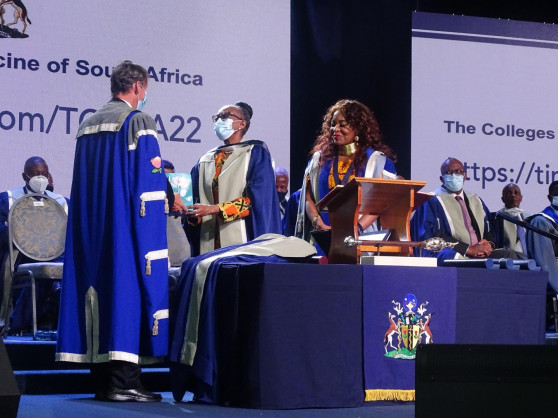
WHO REGIONAL DIRECTOR FOR AFRICAN REGION RECEIVES AN HONORARY FELLOWSHIP AWARD FROM THE COLLEGES OF MEDICINES OF SOUTH AFRICA
-
Kenya’s Fight Against Malaria Receives a Major Boost
-
AMREF Flying Doctors partners with NCBA Group